

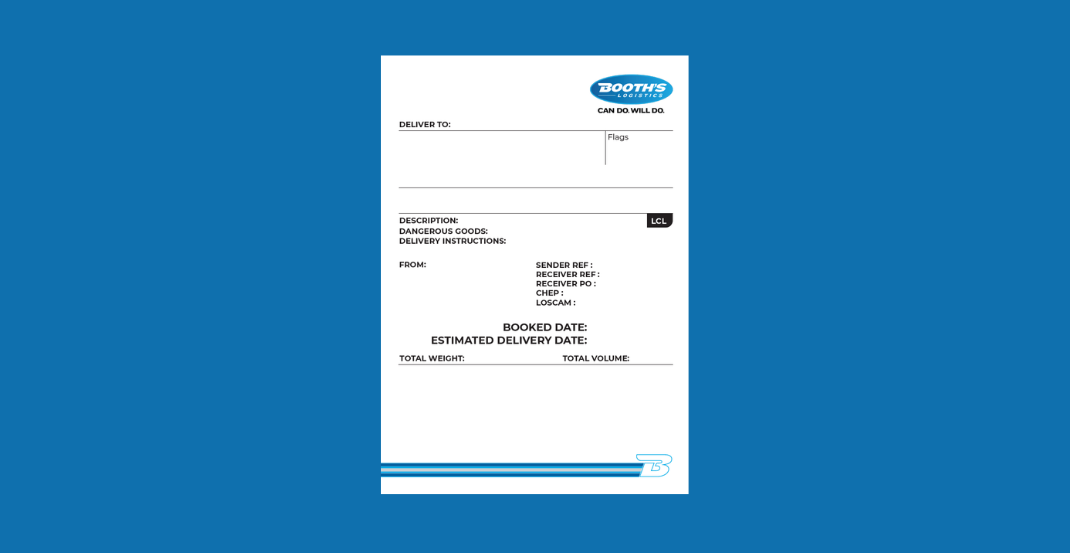
Clear, durable freight labels are one of the simplest ways to keep your items moving smoothly through our network. When labels are easy to read, securely attached, and contain the right information, operators can process freight quickly and accurately, reducing delays, misroutes, and handling issues.
To ensure every item is easily recognised and directed, here are our best practices for freight labelling.
Use high-quality adhesives
A label is only useful if it stays on. Always choose strong, high-quality adhesives that won’t lift, peel, or fall off during transit. This helps maintain label integrity as your freight moves through different environments.
Print labels in A4 size
To ensure the font is large enough and clearly visible, labels should be printed in A4. This helps improve readability, especially in busy depot environments.
Apply multiple labels
For maximum visibility, place identical labels on at least two sides of your freight. This ensures operators can easily scan or read the label no matter how the item is positioned. Always ensure each piece of freight is labelled with its own unique label.
Opt for bright colours
Bright, high-contrast labels stand out. Using bold colours helps operators quickly spot critical information during handling and sorting.
Make information clear and legible
Clarity is key. Use large, easy-to-read text and avoid cluttered designs. This ensures critical details, such as destinations and handling requirements, are immediately understood by operators.
Include all required information
Always print labels directly from the Booth’s B Connected Customer Portal. These labels include all essential information, such as consignment numbers, destination addresses, handling instructions, and any hazardous material indicators. Providing complete details helps prevent delays and ensures your freight is handled correctly.
Choose durable, weather-resistant labels
Freight can encounter sun, rain, dust, and temperature changes. Using labels made from durable, weather-resistant materials ensures they remain readable regardless of conditions.
Use barcodes or QR codes for tracking
Barcodes and QR codes enable fast, accurate scanning, helping your freight move efficiently through our network and improving end-to-end traceability. These need to be printed through the B Connected Customer Portal to ensure our team have barcodes recognisable to our system for scanning.
By following these best practices, you can significantly reduce the chance of label
issues and help ensure your freight is processed accurately, handled safely, and
delivered to the right place. Clear labelling doesn’t just support efficiency, it helps keep your freight moving confidently through the Booth’s network.
Click here to download a copy of this for your own records.
 Linehaul
 Metro
Metro HIAB
HIAB Warehousing & Third Party Logistics
 Container Transport & Handling
 Import Devan & Export Unloading
 Flat Deck
 Produce
 Specialty